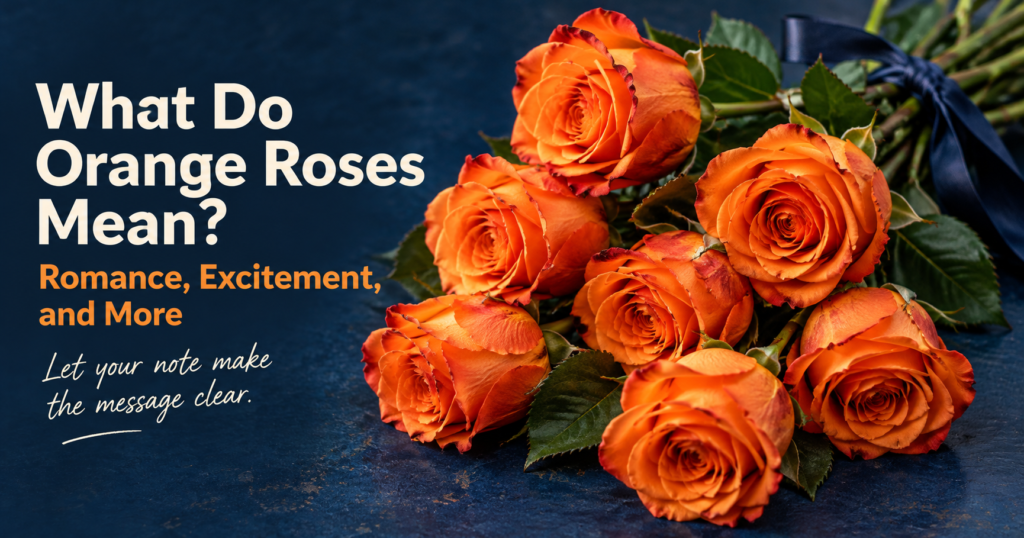
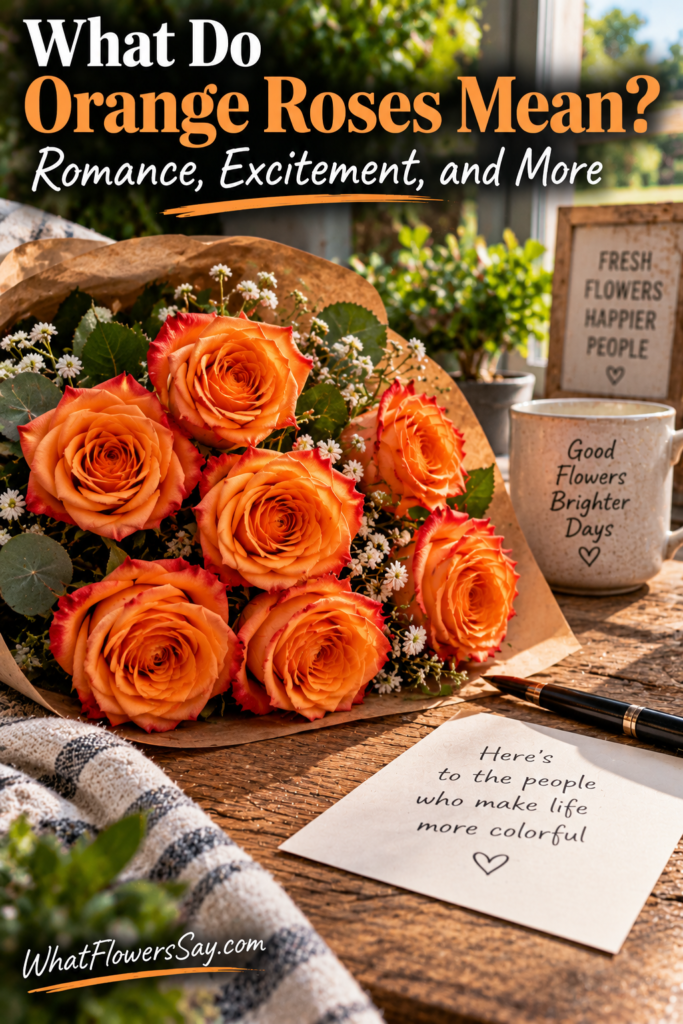
Orange roses commonly mean enthusiasm, passion, and attraction. They can suit a romantic gift, especially when a relationship is just getting started, but they also leave room for a cheerful celebration.
That’s what I like about them. They look ready for a good day.
Someone got the job. Your friend finally graduated. You’ve started dating a person who makes checking your phone a little too interesting. Orange roses give you something bright and warm to work with.
The part I’d think about before buying them is the message.
Are you saying “I’m excited for you” or “I’m excited about us”?
Both can fit. A few words on the card will keep the recipient from having to conduct a full investigation over a vase.
The Main Meaning of Orange Roses
Modern florist guides commonly connect orange roses with enthusiasm and passion. Interflora also associates them with budding relationships. These are gift traditions, rather than a fixed meaning everyone recognizes.
I’d think of orange roses as a possibility when there’s some excitement behind the gift.
That excitement might be romantic. It might be pride in someone’s achievement. Or you might simply want to send flowers that feel lively.
Enthusiasm
Enthusiasm sounds a little formal until you put it into an everyday sentence:
“I’m so happy this happened for you.”
That’s the feeling I’d want an orange bouquet to support after a promotion, graduation, or personal milestone.
The note should name the achievement. “Congratulations” is fine, but “I know how hard you worked for this” gives the gift more heart.
Passion and Attraction
In a romantic setting, orange roses can suggest interest and attraction. FTD includes orange among its romantic rose colors and connects it with the early stages of a relationship.
I can see the appeal when you want to give roses but feel like choosing something beyond the familiar red bouquet.
Still, I wouldn’t expect orange to communicate the exact stage of a relationship. Flowers don’t know whether you’ve had two dates or already met each other’s families.
You know that part. Let it guide the gift.
Are Orange Roses Romantic?
They can be romantic, but they don’t have to be.
A bouquet from someone you’re dating, with an affectionate card, will feel different from orange roses sent by your sister after you finish school.
I wouldn’t worry that giving orange roses to a friend automatically makes the gift a romantic confession. I also wouldn’t assume that receiving them proves someone has feelings for you.
The relationship and occasion matter.
If you’re still deciding between colors, our guide to rose meanings for love, friendship, and thanks gives you a broader comparison.
For Someone You’ve Just Started Dating
My first thought would be whether flowers fit the way things are going.
Have you both shown interest? Do they enjoy thoughtful little surprises? Would they be comfortable receiving the gift?
If the answer is yes, a modest orange bouquet could be a lovely choice. I’d keep the card warm and easy:
“I’ve really enjoyed spending time with you. Looking forward to our next date.”
That tells them where you stand without asking a flower color to explain your feelings.
I’d also consider giving the flowers privately. Some people love a workplace delivery. Others would rather eat the card than explain their dating life to the entire office.
Knowing the person helps more than knowing the symbolism.
For Your Spouse or Longtime Partner
Orange roses aren’t reserved for new relationships.
If your partner loves the color, that’s a strong reason to choose it. If you normally give red roses, orange might be a fun change.
I’d make the message personal to your life together:
“I still love having things to look forward to with you.”
Or:
“Life has been busy. I wanted to pause long enough to tell you how much I love you.”
You don’t need an anniversary to do that. A regular week can use a little sweetness, too.
When I’d Give Orange Roses for a Celebration
This is where the enthusiasm association feels especially useful to me.
I’d consider orange roses when I want the gift to feel happy, proud, and ready to celebrate. These are my suggested uses, not occasions with one required rose color.
A New Job or Promotion
A new job can bring relief, nerves, excitement, and approximately fourteen questions about what to wear.
Flowers can acknowledge the good news without adding advice the person didn’t ask for.
My card might say:
“They’re lucky to have you. I’m so glad your hard work led to this.”
For a promotion:
“You earned this. I hope you take a moment to enjoy it before jumping into the next thing.”
I like that second message because people who work hard sometimes need a little encouragement to actually celebrate.
A Graduation
I’d choose orange roses for a graduate who enjoys bright colors.
The note could recognize more than the ceremony:
“I know this took work, patience, and some long days. I’m proud of you.”
One practical thought: if you’re bringing the flowers to the ceremony, keep the arrangement easy to carry. The graduate may already be managing a cap, phone, program, and several relatives trying to take pictures at once.
A thoughtful gift shouldn’t require an extra pair of arms.
A Goal That Doesn’t Come With a Ceremony
Some achievements never get a stage or a certificate.
Someone finishes a difficult project. Opens a small business. Goes back to school. Finally does something they’ve been nervous about for months.
I’d consider flowers because those moments deserve to be noticed, too.
“You kept going, and I know it wasn’t easy. I’m happy for you.”
That’s enough. You don’t have to make their achievement sound bigger or different than it was. Recognizing the real work is meaningful.
Can I Give Orange Roses to a Friend?
Yes. I’d make the reason clear, especially if there’s any chance the gift could be misunderstood.
For a birthday:
“Happy birthday to my favorite person to laugh at absolutely nothing with.”
For an achievement:
“I knew you had it in you. So happy for you, my friend.”
For a simple surprise:
“These looked cheerful, and I thought you could use a little something cheerful today.”
If your friendship has some uncertainty around romantic feelings, I’d avoid a vague unsigned bouquet. A clear card gives the person something kind to enjoy instead of something confusing to analyze.
And if you do want to express romantic interest, say that gently. Don’t send flowers and hope the recipient finds the same symbolism page you did.
What If Someone Sent You Orange Roses?
I’d start with the card.
Did they mention your birthday, congratulate you, or write something affectionate? That information is more useful than the color by itself.
Without a card, I’d look at the occasion and your relationship. A partner, friend, relative, or coworker could have very different reasons for choosing the same flowers.
You can also ask:
“These are beautiful. What made you pick orange?”
That’s a natural question, not a demand for a relationship announcement.
I wouldn’t treat the bouquet as proof of love, friendship, or anything in between. Enjoy the gesture, then let the person’s words and behavior tell you more.
Orange Roses Compared With Red and Yellow
Red roses commonly carry a romantic association, while yellow roses are commonly linked with friendship. Orange is often presented in modern gifting guides as a color for passion and enthusiasm.
That comparison can help you get started, but I wouldn’t turn it into a scale where yellow means no attraction, orange means some attraction, and red means lifelong commitment.
People choose flowers for all kinds of reasons.
For a clear romantic gift, I’d consider red or orange and write an affectionate note. For a friend’s celebration, I’d consider yellow or orange and name the occasion.
If the recipient has a favorite, I’d give that preference plenty of weight.
A bouquet in the color they love says you paid attention. That’s a pretty good message all by itself.
What About Pale Orange, Apricot, or Coral?
I wouldn’t assign a separate emotional meaning to every shade.
If you’re choosing between a soft apricot bouquet and a vivid orange one, think about the look the person enjoys. Would they prefer something gentle or something bright?
For ordering, describe the shade you want rather than relying only on a color name. “Soft peach-orange” and “bright orange” give the florist more useful direction.
You can also ask how close the finished arrangement will be to the photo and whether substitutions could change the color.
How I’d Handle Mixed Orange Rose Bouquets
A mixed bouquet doesn’t need a precise translation.
Orange and yellow would be a combination I’d consider for a bright celebration. Orange and pink could make a cheerful birthday gift. Orange with cream or white could suit someone who likes a softer arrangement.
Those are visual suggestions, not formulas for a hidden message.
I’d ask myself whether the whole bouquet looks like something the recipient would enjoy. Then I’d choose a note that explains the reason for the gift.
You can even mention the color casually:
“I wanted something bright enough to match how happy I am for you.”
That connects the flowers to the moment without making the card feel like a lesson.
What I’d Write With Orange Roses
Here are original messages for different situations. Change a few words so the card sounds like you.
For a New Romantic Interest
“I’ve been smiling a little more since we started spending time together. Looking forward to seeing you again.”
For Your Partner
“I still get excited about the things we get to do together. Love you, on the ordinary days, too.”
For an Anniversary
“I love what we’ve built, and I love that we still have so much ahead of us.”
For a New Job
“I’m so happy for you. They’re getting someone who cares and works hard.”
For a Graduation
“You did it. I know how much went into getting here, and I’m proud of you.”
For a Friend’s Birthday
“Some flowers for someone who makes life a lot more fun. Happy birthday.”
For Someone Starting a Business
“I’m proud of you for taking this step. Cheering you on as you get started.”
For Someone Who Needs Encouragement
“Thinking of you today. No need to write back. I just wanted to send a little kindness your way.”
For a Playful Romantic Note
“You’ve been distracting me. These seemed like a nicer way to tell you.”
A Few Details I’d Check Before Sending Them
First, I’d make sure flowers are a gift the person actually enjoys. Some people would much rather have lunch together, a handwritten note, or help with an errand.
If flowers fit, I’d check the delivery timing and whether the arrangement includes a vase. For a busy person, an arrangement they can simply set down may be easier than loose stems.
Then I’d think about the size.
A small bouquet can be thoughtful. A large one can be wonderful, too, but I’d want it to match the relationship, occasion, and space where it will go. Bigger doesn’t automatically mean more caring.
Finally, I’d reread the card and ask: Would they understand why I sent this?
“Hope you like these” doesn’t tell them much.
“I remembered you love orange, and I wanted to celebrate your good news” does.
That little detail shows the thought behind the gift. The roses are lovely, but knowing someone remembered what you like is something you can carry with you.
Written by the What Flowers Say Editorial Team, sharing researched flower meanings and thoughtful ways to give them.