
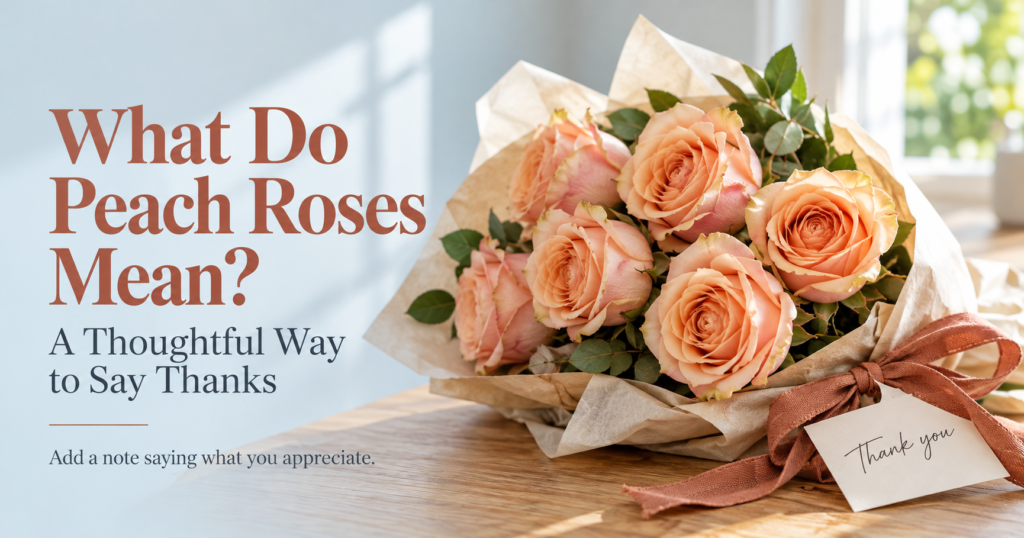
Peach roses commonly mean gratitude, sincerity, and appreciation. They’re a thoughtful choice when you want to say “thank you,” “you matter to me,” or “I noticed what you did.”
And honestly, some kindness deserves more than a thumbs-up emoji.
Someone brings dinner when your week falls apart. A friend listens without checking the clock. Your neighbor helps with something that was definitely supposed to take “just five minutes.” Famous last words.
A thank-you text is good. But when you want to make that appreciation feel a little more special, peach roses make sense.
What I like about them is the room they leave for a personal message. They can fit friendship, family, or a romantic relationship. The color gives you a starting point. Your words tell the person why these flowers showed up.
What Peach Roses Say
The clearest modern meaning of peach roses is sincere appreciation.
FTD connects them with gratitude and sincerity, while Interrose describes them as a way to acknowledge kindness. Those are modern florist associations, rather than one official meaning that every culture or recipient follows.
To me, that makes peach a useful color for a gift with a specific reason behind it.
Not just “Here are some flowers.”
More like “You did something that mattered, and I don’t want it to go unmentioned.”
Gratitude for Something Specific
I think thank-you gifts feel more personal when they name the thing you’re thankful for.
“You’re wonderful” is sweet. “You made sure we had dinner when I couldn’t handle one more thing” tells someone their effort reached you.
That’s the kind of message I’d put with peach roses.
The bouquet gives the thank-you a little ceremony. The note makes it theirs.
Sincerity Without a Big Speech
Sincerity can sound like a stiff word until you bring it back to everyday life.
You mean what you’re saying. You aren’t sending flowers because the calendar reminded you. You want someone to know their kindness didn’t disappear into the background.
My thought is usually: Keep the flowers pretty and the message plain.
“Thank you for being there” can be enough, especially when both of you know exactly what “there” means.
Appreciation That Goes Beyond a Favor
You don’t need a recent favor to appreciate someone.
Maybe you’re grateful for a friendship that makes life feel less lonely. Maybe your mom keeps checking in. Maybe your spouse does a hundred small things that rarely get their own thank-you.
I like the idea of giving flowers before appreciation becomes overdue.
There doesn’t have to be a birthday. Tuesday is available.
When I’d Give Peach Roses
If you’re trying to choose between colors, think about what you want the recipient to understand. Our guide to what different rose colors commonly mean compares the other options.
For peach, these are the situations where the appreciation theme feels especially useful to me.
Someone Helped During a Rough Week
Help doesn’t always arrive looking impressive.
Sometimes it’s a meal, a ride, an errand, or a person saying, “I can take care of that.”
When someone removes a little weight from your shoulders, naming that relief makes a good thank-you.
I’d write:
“Thank you for making a hard week easier. Your help meant more than I knew how to say at the time.”
There’s no need to turn it into a speech. They helped because they cared. Let them know it helped.
A Friend Keeps Showing Up
Some friends remember the appointment, ask the follow-up question, and notice when “I’m fine” sounds a little less fine than usual.
I’d consider peach roses for that friend, especially if they enjoy flowers but rarely buy them for themselves.
My note might say:
“You always make room for me. I wanted to do something kind for you, too.”
That feels warmer than a generic message about being the world’s best friend. Although if yours really is, I’m happy for you.
A Host Put Thought Into Having You Over
For a dinner invitation or weekend visit, I’d consider a modest arrangement with a vase.
That’s my practical preference: give the host something they can set down and enjoy. If they’re checking the oven and answering the door, I wouldn’t want my thank-you to create another job.
The card could say:
“Thank you for having us. You made everyone feel welcome, and we really enjoyed the time together.”
If you know they dislike flowers or don’t have room for them, choose something else. A thoughtful gift starts with the person, not the symbolism.
You Want to Appreciate Your Spouse
Romantic relationships have plenty of moments that aren’t anniversaries.
Maybe your spouse carried more of the household work while you were busy. Maybe they handled a difficult day with patience. Maybe you simply caught yourself thinking, “I’m glad we’re doing this together.”
That’s a perfectly good reason for flowers.
I’d write:
“I see how much you do for us. Thank you for loving our family in all those everyday ways.”
A note like that makes the gift romantic through the relationship and the words. The flowers don’t have to be red to belong in a marriage.
Are Peach Roses Romantic?
They can be. Their color alone doesn’t establish romantic intent.
FTD describes peach roses as suitable for romantic and nonromantic occasions. That flexibility matters if you’re wondering whether they’re appropriate for a partner or trying to understand a bouquet you received.
For a romantic gift, I’d make the card affectionate enough that nobody has to guess.
“I’m grateful for you” is lovely, but it could be written to several people in your life.
“I’m grateful I get to share my life with you” makes the relationship clearer.
For Someone You’ve Just Started Dating
I’d think about the person before thinking about the color.
Do they enjoy flowers? Would a delivery feel sweet or put them on the spot? Have you already made your interest clear?
If a bouquet fits, I’d keep the message natural:
“I’ve really enjoyed spending time with you. Looking forward to seeing you again.”
You don’t need a grand declaration just because you bought roses.
And please sign the card. Mystery is fun in a movie. It’s less useful when someone’s trying to figure out who sent flowers to their front door.
If Someone Gave You Peach Roses
I wouldn’t read a romantic promise or a rejection into the color.
Look at the card, the occasion, and your relationship. They might be saying thanks. They might be showing affection. They might have chosen the bouquet because it looked beautiful.
If the meaning matters to you, you can ask without making it awkward:
“These are so pretty. What made you choose peach?”
That gives them room to explain in their own words.
Peach, Pink, or Orange Roses?
Peach roses can look close to pale pink or soft orange. If you’re staring at three bouquet photos and getting nowhere, I’d stop trying to identify the perfect symbolic shade.
For me, the decision would come down to two things: which bouquet suits the recipient, and what I plan to write.
For a thank-you, peach or pink would both be options I’d consider. For someone who loves bright colors, I might choose the orange arrangement instead.
A person who adores bold flowers may enjoy vivid orange more than pale peach, even when you’re thanking them. That preference is useful information. Use it.
Do Light and Dark Peach Roses Mean Different Things?
I wouldn’t assign a precise message to every shade.
A pale peach rose and a deeper apricot rose may look quite different, but I’d keep both within the broad appreciation theme rather than promise one says “friendship” and the other says “romance.”
Let the shade be a visual choice.
The card is where you can be exact.
Peach Roses for Weddings or Sympathy
These occasions deserve a little more thought because the flowers sit inside a bigger moment.
For a Wedding
FTD includes peach roses among options for wedding arrangements.
I can see appreciation being a lovely personal meaning for a couple to give them: gratitude for each other, their families, or the people who helped them reach that day.
But I wouldn’t claim peach roses make a promise about a marriage. A couple can choose them simply because they love the color.
Sometimes “these are beautiful” is a complete reason.
For Someone Who Is Grieving
I’d first check whether flowers are welcome. If the family asks for donations instead, I’d follow that request.
If flowers are appropriate, peach would be an option I’d consider when I know the person likes the color. I’d keep the note gentle and avoid trying to make the loss sound less painful.
“I’m so sorry. I’m thinking of you and your family.”
Or, if you knew the person who died:
“I’ll always remember how welcome she made me feel. I’m grateful I knew her.”
The meaningful part is remembering the person honestly.
What to Write With Peach Roses
A short card can carry a lot of feeling. These are original examples you can use as they are or change to fit your situation.
For Someone Who Helped You
“You made things easier when I really needed help. Thank you for giving your time and showing up.”
For a Friend
“I’m grateful for our friendship, including all the conversations that somehow last much longer than we planned.”
For Your Mom
“Thank you for all the things you do that don’t get their own special occasion. I notice, and I love you.”
For Your Spouse
“I love the life we’re building together. Thank you for everything you put into it, even on the tired days.”
For a Neighbor
“Thank you for helping us out. We’re lucky to have you nearby.”
For Someone Far Away
“I wish I could bring these over myself. Until then, here’s a little reminder that I’m thinking of you.”
For Someone Who Listened
“You didn’t have to fix anything. Having you listen helped more than you probably realized.”
For a Thank-You With a Little Humor
“Flowers seemed nicer than another text saying ‘thank you!!!’ So here we are. Seriously, I appreciate you.”
Before You Order the Bouquet
I’d check a few ordinary details before buying.
First, does the person like flowers? Next, will they be home to receive them? And does the arrangement include a vase, or will they need to find one?
If the peach shade matters, I’d ask the florist what they have available and whether substitutions could change the color. A listing photo is a useful starting point, but I’d want the seller to confirm what they can provide.
Then I’d read the card one more time.
Does it say what I actually appreciate?
If the message could go to anyone, add one detail that belongs to this person.
“Thank you for everything” becomes “Thank you for checking on us after everyone else went home.”
“You’re amazing” becomes “You made sure I didn’t have to handle that day alone.”
That’s where a peach-rose gift becomes personal. A pretty bouquet, a real reason, and a few words someone might keep long after the flowers are gone.
Written by the What Flowers Say Editorial Team, sharing researched flower meanings and thoughtful gift ideas.